
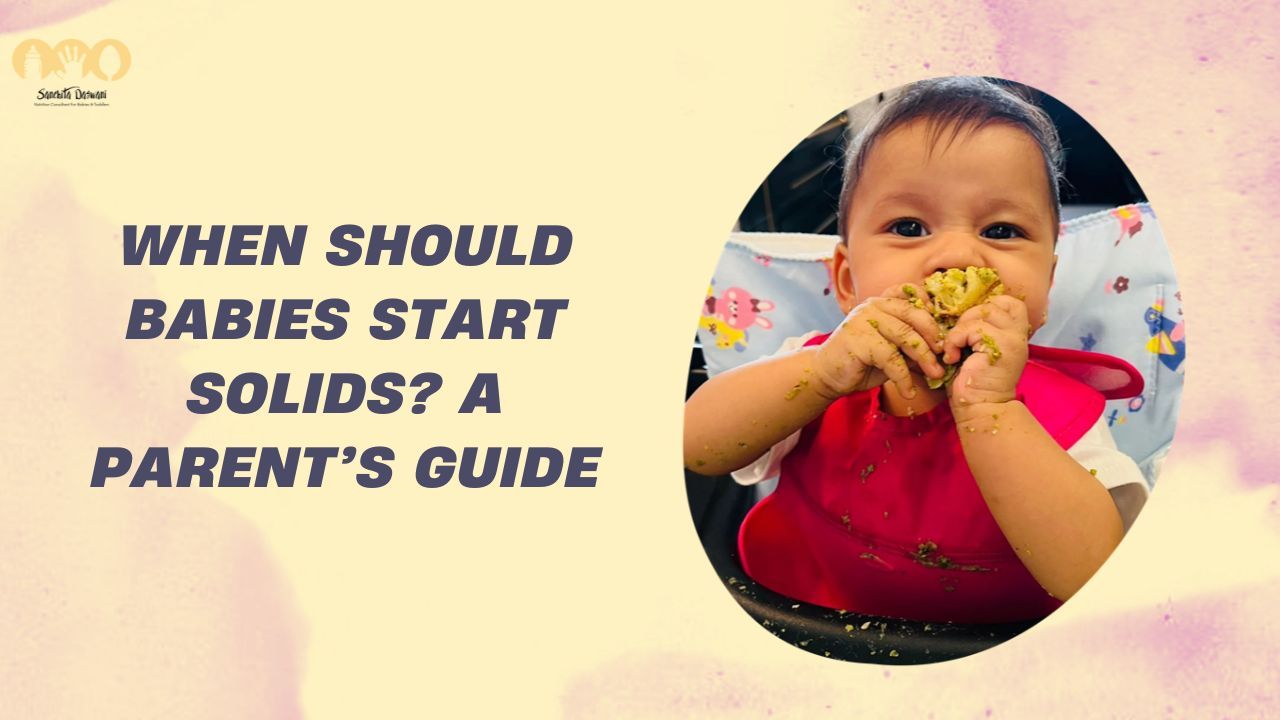
When Should Babies Start Solids? A Parent’s Guide
Jul 23, 2026Introducing solids is a joyous milestone, but it can often leave parents feeling overwhelmed. Once you understand when to start solid food for babies and how to navigate the process, the entire transition becomes much smoother. Your child is likely to enjoy discovering new tastes, exploring different textures, and developing healthy feeding habits. As a children's nutritionist, Sanchita Daswani emphasizes the importance of building proactive, nourishing routines from the very beginning.
When Should Solid Foods Be Introduced in Infants?
The question topmost on every parent's mind is when to start solid food for babies. While the majority of babies are ready around six months of age, every child develops at their own unique pace. Rather than relying solely on age, look for these key developmental milestones:
- Excellent head, neck, and trunk control.
- The ability to sit upright with minimal support.
- Showing a keen interest in watching others eat.
- Opening their mouth when food is offered.
- A diminished tongue-thrust reflex (no longer automatically pushing food out with their tongue).
These physical indicators are excellent signs that your baby is ready to begin their culinary journey.
Understanding the Difference Between a 5 Month Old Baby Feeding Schedule Solid Food and a 6 Month Old Baby Feeding Schedule
Starting a 5 month old baby feeding schedule solid food is generally not recommended unless explicitly advised by your pediatrician. At five months, breast milk or formula must remain your baby's primary source of total nutrition.
By contrast, a 6 month old baby feeding schedule typically introduces one small solid meal a day while maintaining regular milk feeds. Because your baby is developing rapidly and can now appreciate a wider range of flavors and textures, this is the perfect time to introduce complementary foods to their diet.
Introducing Solids Feeding Schedule for Your Baby: Steps Involved
When establishing an introducing solids feeding schedule, it is vital to keep things simple and flexible. All babies are learners who progress at their own pace. A healthy baseline routine includes:
- Continuing breast milk or formula feeds on demand.
- Offering solids once a day, ideally shortly after a milk feed.
- Introducing just one new single-ingredient food at a time to monitor for tolerance.
- Allowing your infant to freely explore various textures.
Perfection takes time, but maintaining a consistent routine is key during these early stages.
Best Immune Boosting Foods for Babies to Include within their First Year
Incorporating immune boosting foods for babies provides the essential nutrients needed for optimal growth and a robust immune system. Aim to include a diverse variety of whole foods, such as:
- Iron-rich lentils and lean meats.
- Vitamin C-rich fruits like oranges and kiwis.
- Vitamin A-rich vegetables like sweet potatoes and carrots.
- Age-appropriate yogurt containing live cultures.
- Nutrient-dense vegetables and eggs.
Offering a colorful variety of wholesome options ensures healthy eating patterns and expands your baby's palate.
Mistakes That Parents Commonly Make When Feeding Their Babies with Solid Foods
It is entirely natural for parents to worry about getting everything right. However, some of the most frequent missteps include introducing solids too early, expecting babies to finish entire portions, delaying the introduction of common allergens without medical reason, and offering exclusively sweet foods. Mealtimes can become much more pleasant by remaining patient, tuning into your baby's hunger cues, and consistently offering a diverse rotation of whole foods.
Developing Good Eating Practices with Proper Feeding Time and Appropriate First Foods
Building a positive relationship with food begins with a proper feeding time and plenty of patience. A well-structured introducing solids feeding schedule, nutritious first foods, and a clear understanding of when to start solid food for babies layout a strong foundation for a lifetime of wellness.
For professional guidance and practical, stress-free strategies, Sanchita Daswani is a trusted resource who simplifies every aspect of child nutrition. Explore her specialized masterclasses and expert tips to build your confidence and transform baby feeding into a delightful experience.
Frequently Asked Questions
How do I include immunity-boosting foods in my baby’s diet?
Incorporate immune-boosting foods for babies with guidance from Sanchita Daswani. Add nutrient-rich fruits, vegetables, and grains to strengthen immunity while maintaining balanced, age-appropriate meals.
What is a good baby solid food schedule?
A well-planned baby's solid food schedule ensures balanced nutrition and smooth transitions. Sanchita Daswani recommends starting with small portions, gradually introducing new foods, and maintaining consistent meal times to support your baby’s growth and development.
What does a solid feeding schedule look like for beginners?
A beginner-friendly solid feeding schedule includes small, frequent meals with simple purees, gradually increasing textures. Sanchita Daswani advises monitoring the baby’s cues, ensuring variety, and keeping feeding times consistent for optimal growth.