
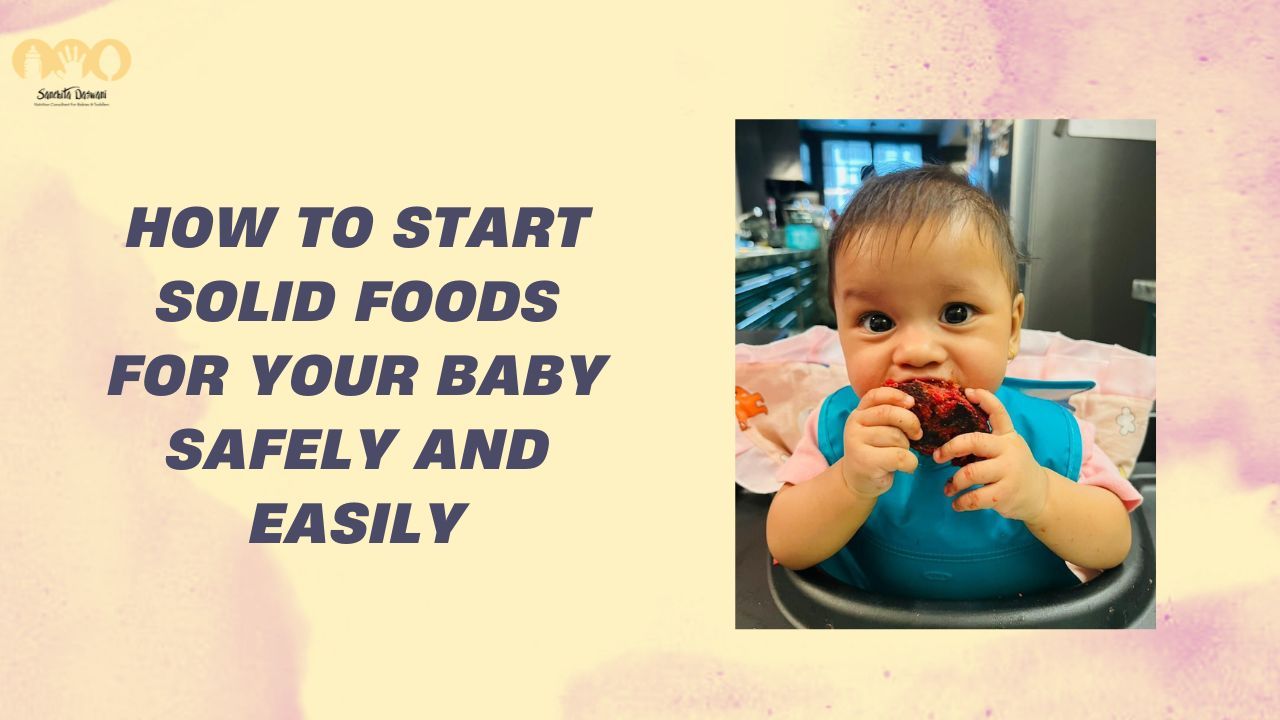
How to Start Solid Foods for Your Baby Safely and Easily
May 29, 2026Starting solids is a special moment which parents should anticipate but which they will find impossible to prepare for completely. The process of beginning solid food for your baby becomes easier once you stop worrying about everything, because you discover the actual procedures that need to be followed.
When Should You Start Solids?
The majority of infants reach their solid food introduction point at six months, although each individual infant develops according to their unique schedule. Instead of focusing only on age, watch your baby for physical readiness cues. You might notice they stare at your food like they want a bite, they can sit beautifully with support, their neck control is much better, and they open their mouth wide when you bring food near. These little signs are your perfect cue that it’s a good time to begin introducing solid food for 6 month baby.
First Foods: Don’t Overthink It
A lot of parents feel intense pressure to start with the single perfect food, but the truth is there’s no perfect first meal. Keep it simple, soft, and familiar. You can easily start with mashed banana which is super easy and baby-friendly, soft apple puree, traditional rice porridge, well-mashed dal, or simple vegetable purees like carrot or pumpkin.
What Does a 6 Month Baby Food Schedule Look Like?
This is where many parents get easily confused, but here’s the most important part to remember: milk is still the main source of nutrition. Think of solids as a gentle, small introduction rather than a replacement for their milk feeds. A simple, realistic 6 month baby food schedule could look like a morning milk feed, a few spoonfuls of solids in the late morning, followed by regular milk feeds in the afternoon and evening. That is truly it, and no complicated planning is needed at this stage.
As Your Baby Grows (Around 8 Months)
Things start getting a bit more fun around this stage as your baby becomes much more comfortable with food. You can slowly increase both the variety and quantity of their meals. A basic 8 month old baby food schedule may include two to three small meals a day, one snack like a simple fruit mash, and their regular milk feeds. You can now confidently offer soft khichdi, mashed roti with dal, soft fruits like banana or chikoo, and lightly mashed vegetables. You’ll also notice your baby eagerly trying to grab food themselves, which is messy but completely normal developmental behavior.
Adding Immune Boosting Foods for Babies
At this stage, food also starts actively supporting your baby’s immunity. You only need common foods from daily life to achieve your goal, rather than hunting for exotic ingredients. You can use these foods from everyday life which include seasonal fruits that include banana, apple, and papaya, alongside fresh vegetables which include carrot, sweet potato, and spinach. Incorporating lentils, dals, and a little ghee for healthy fats creates an incredible dietary foundation. The basic elements which you add to your diet will develop your baby's physical power and strength against illness naturally.
A Few Things You’ll Be Glad You Knew
While the weaning guideline lacks official hard-and-fast rules, the following minor suggestions provide useful assistance to parents starting out. You should always remain present during your baby's mealtime to ensure safety, and you should introduce only one new food item during each meal so you can track their digestion. You should provide foods which have soft textures that your baby can easily consume, and you must always avoid giving honey to your baby until they reach one year of age due to infant safety. Finally, you should not press your baby to eat more food than they want. Some days they’ll eat well, and some days they won’t, and that is completely normal.
If You’re Feeling Unsure, That’s Okay
Almost every single parent feels confused in the beginning, wondering how much is enough, what to do if the baby refuses, or what is truly right. The solids course which structured programs offer through Sanchita Daswani will help you understand solids better while eliminating all the stressful guesswork.
Final Thoughts
The process of starting solids requires you to take small steps, after which you will beautifully learn everything together with your baby. The best way to achieve progress involves taking your time while following simple methods which produce successful outcomes. Your baby will grow to love food before you even notice it, and you will eventually question why you ever experienced so much anxiety about this matter in the first place.
Frequently Asked Questions
What should be my baby’s first solid food?]
Selecting the baby's first solid food with Sanchita Daswani ensures safe, nutrient-rich options. Begin with simple, soft, digestible foods that promote healthy growth and ease the transition to solids.
How do I start solids for my baby for the first time?
Learn how to start solids for a baby with Sanchita Daswani. Follow a structured approach, beginning with safe, soft foods and gradually introducing variety for balanced nutrition.
What is the ideal feeding schedule for a 6-month-old baby?
A baby feeding schedule 6 months from Sanchita Daswani balances milk feeds and solids, ensuring optimal nutrition, growth, and developmental milestones for your baby’s health and well-being.
When should I start giving solid food to my baby?
Determine when to start solid food for babies with advice from Sanchita Daswani. Introduce solids around six months, guided by readiness signs and balanced nutrition to support growth safely.